
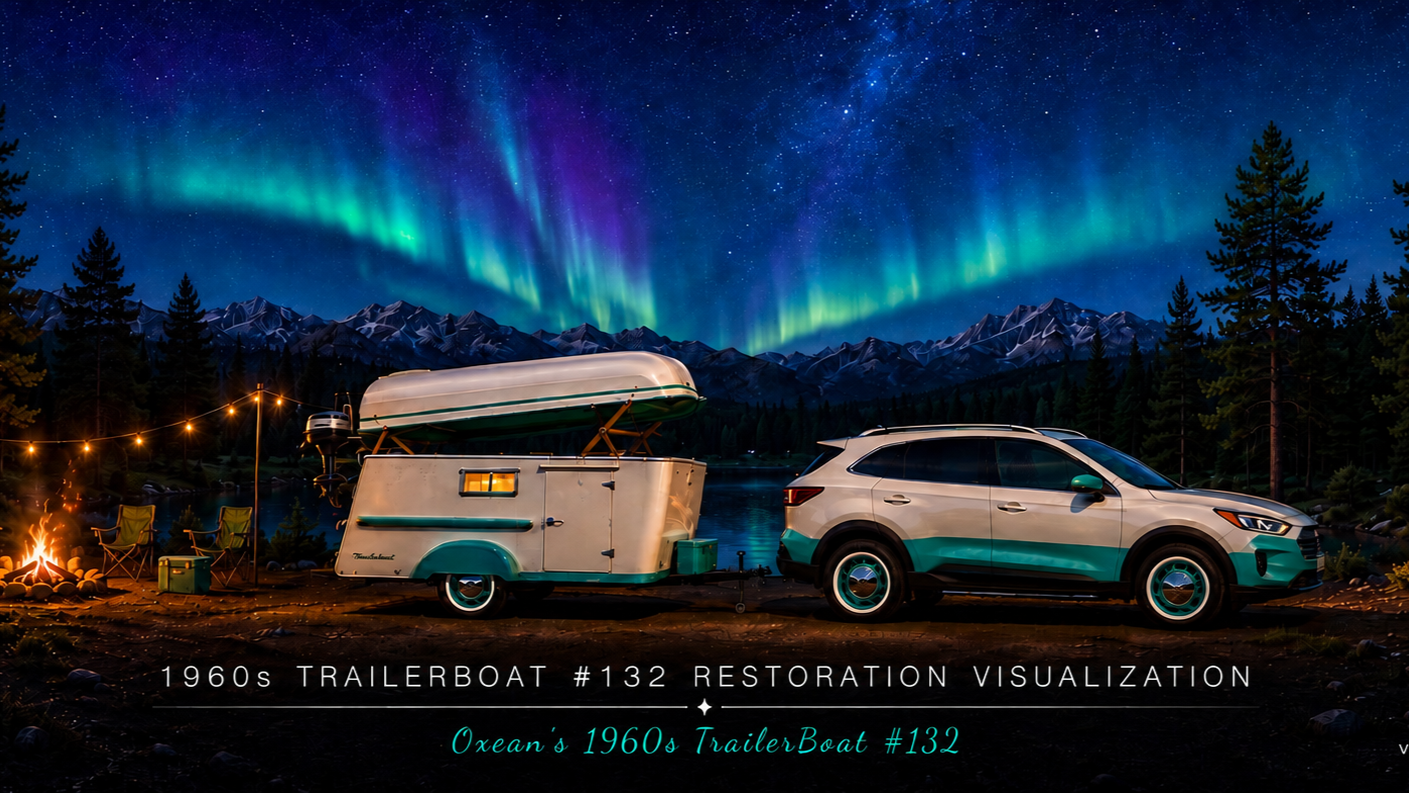
THE FUTURE OF CAMPING, Circa 1960, Meets the Twenty-Twenties.
Restoring Trailorboat #132— One of just 29 known to exist.
Once built for the open road and open water, Trailorboats have become a rare piece of American history. Several hundred were made between 1961 and 1963. Most are lost to history. This is my journey to restore #132— which I have named Stargazer and Splashdown. Follow along as I uncover its story, preserve what survives—and, along the way, restore a part of myself that was lost too.
#132 won’t spend its next chapter sitting behind ropes. I’m restoring it to travel, camp, return its boat to the water, and bring a little Space Age optimism into the twenty-twenties.
Down the rabbit hole.
The Vintage Trailorboat Blog. A rabbit hole of history, design, restoration, random discoveries and things I probably didn't need to know—but now you will too.
Somewhere between “What the hell is a Trailorboat?” and bringing #132 home, I fell down a rabbit hole. And it turns out that rabbit hole goes a lot deeper than I expected. These are the stories, discoveries, design obsessions, unanswered questions, restoration decisions and adventures I’m finding down here—from old photographs and forgotten history to Space Age cars, fiberglass pioneers, campgrounds, car shows and unmentionable adventures, and whatever the hell #132 leads me to next.
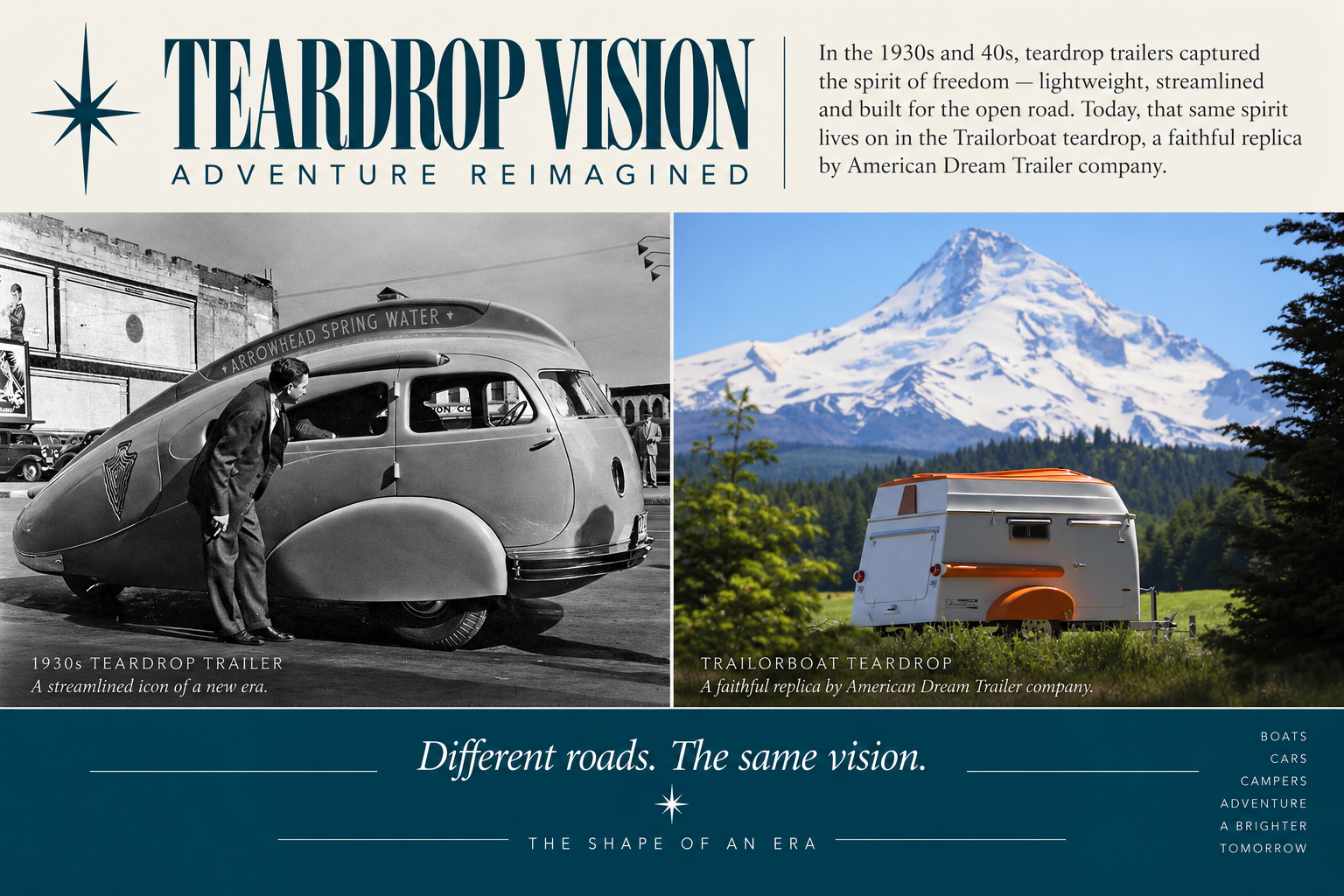
The shape of an era
From an era when America dreamed differently.
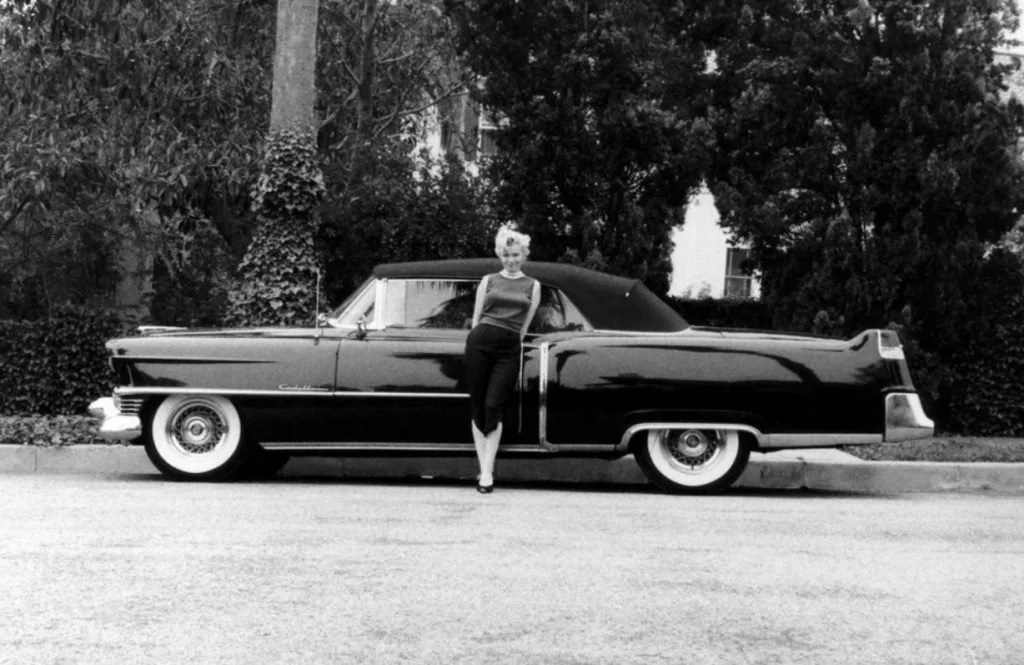
Marilyn Monroe and a Cadillac—two unmistakable silhouettes from an era when even glamour had a shape.The Trailorboat didn’t appear out of nowhere. Its curves, fins, sculpted sides and integrated wheel wells belonged to a moment when American design was looking forward—shaped by movement, optimism, speed and the promise of what came next.
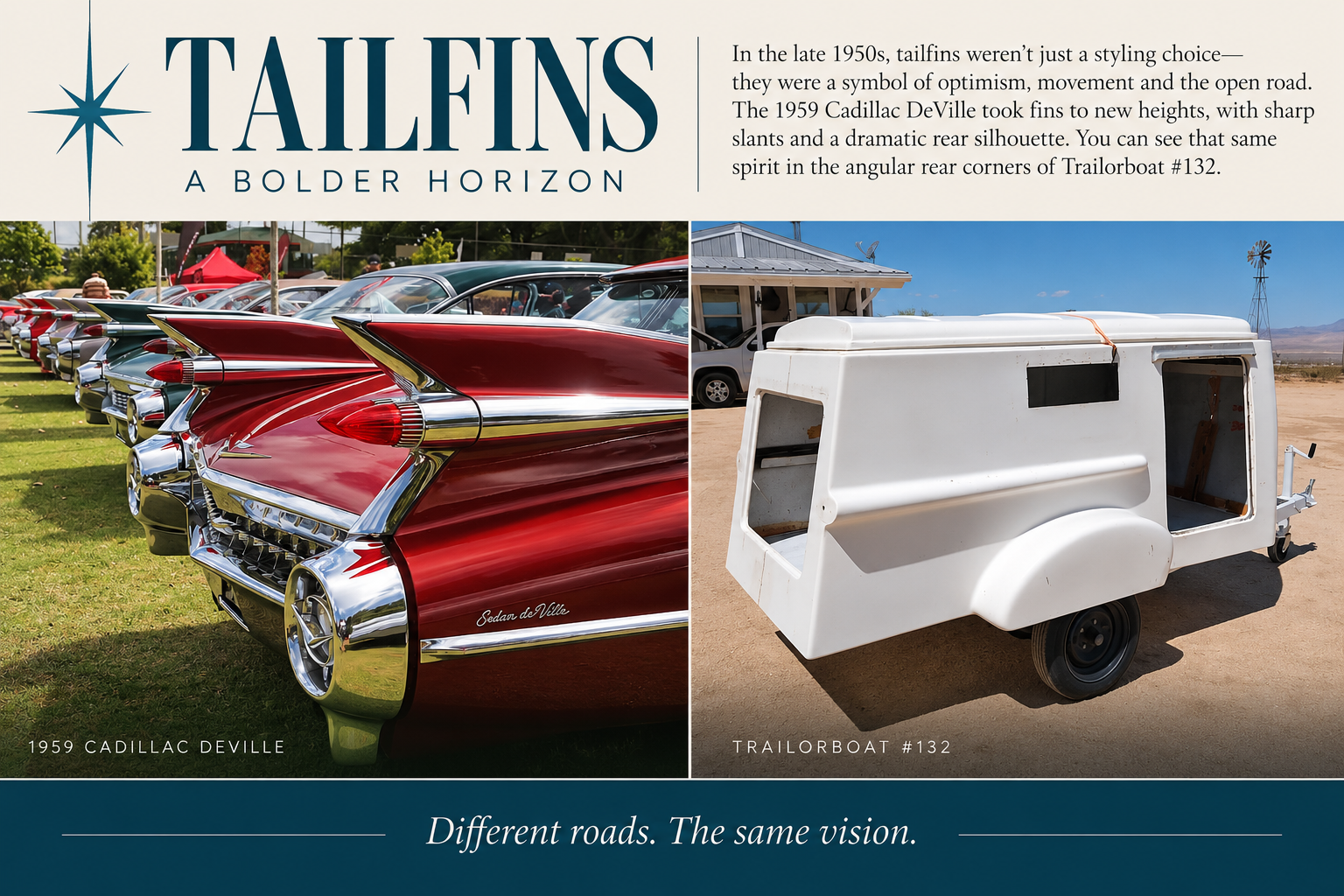
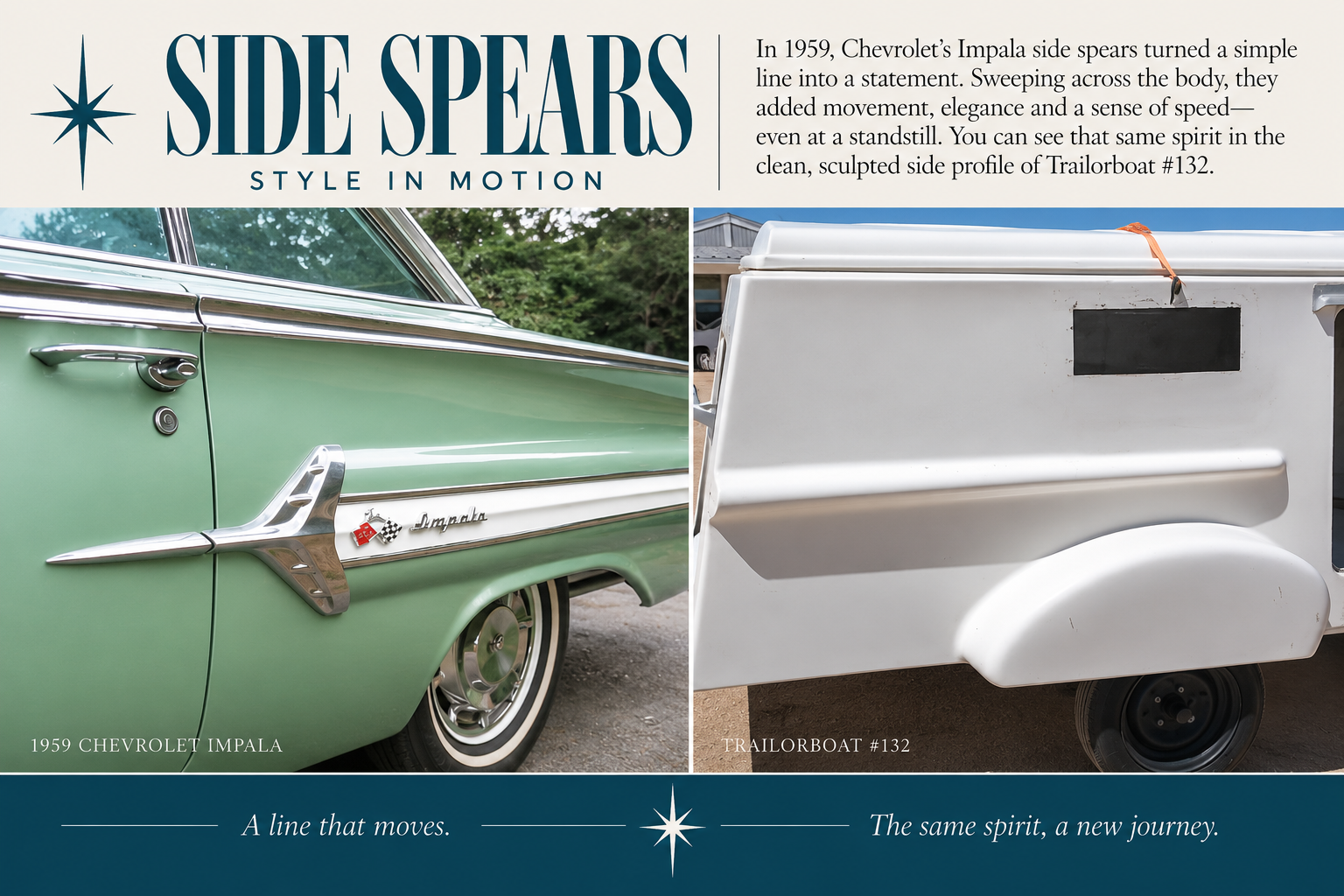
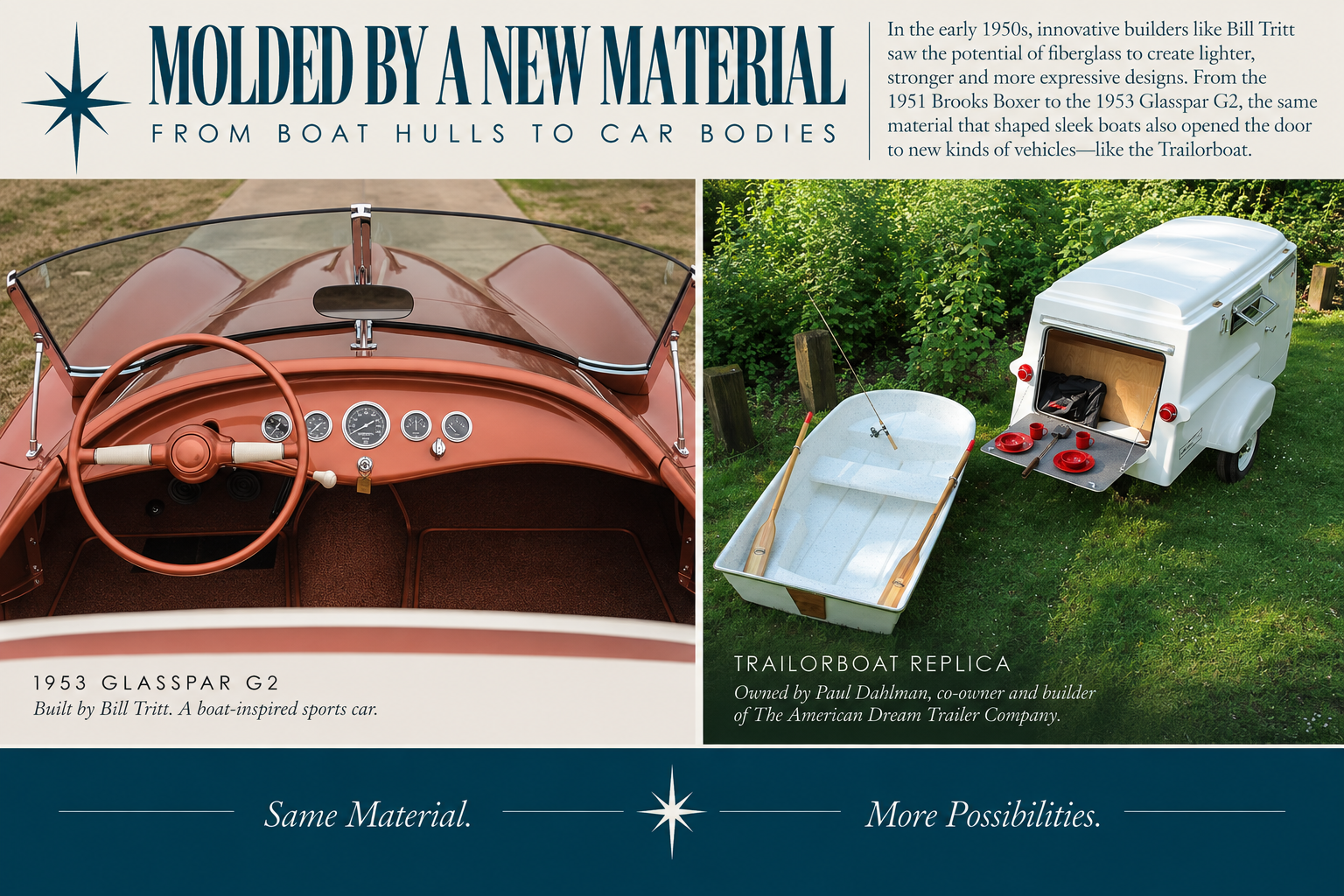
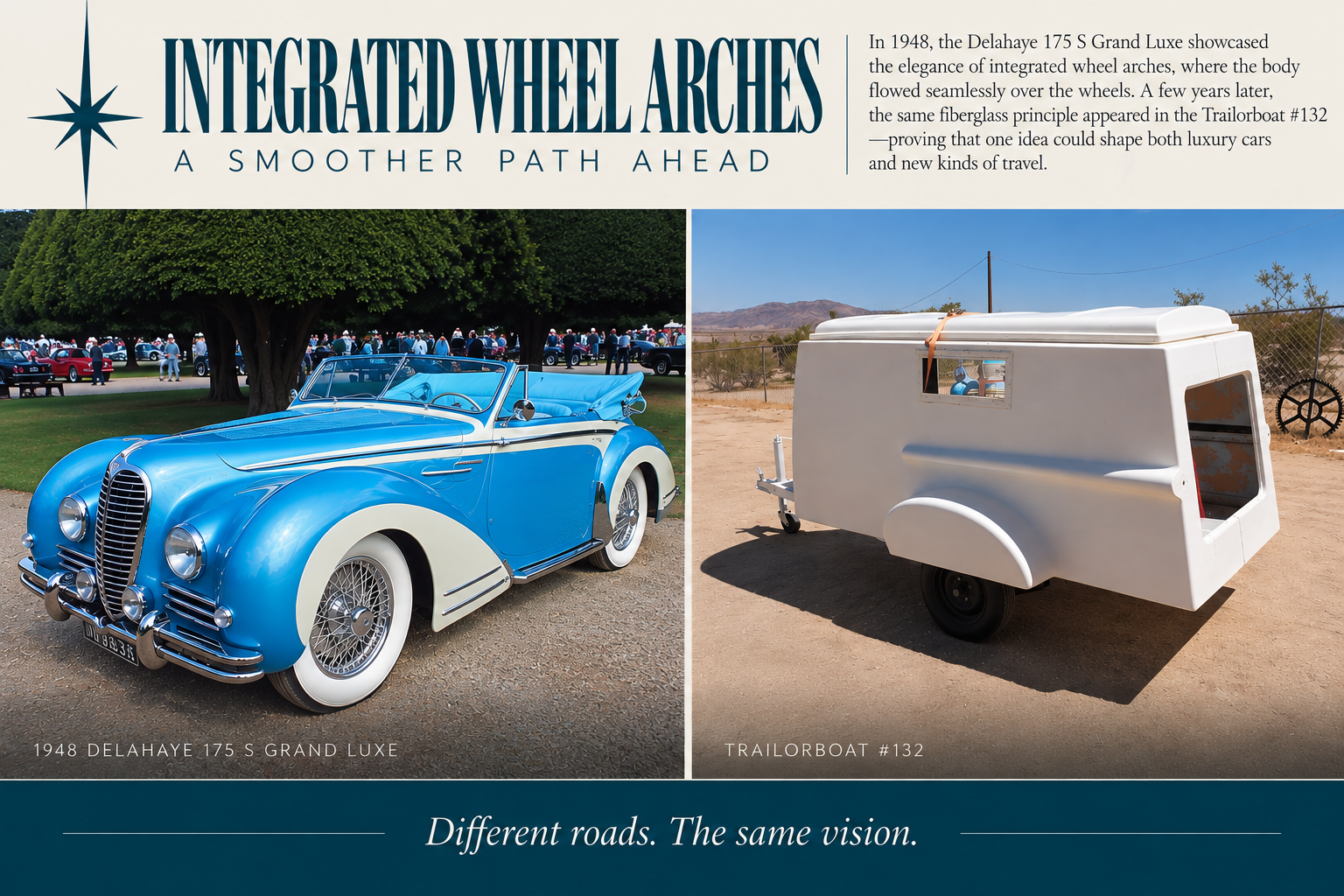
By the late 1950s and early 1960s, automobiles had become rolling expressions of the Space Age. Tailfins reached toward the sky. Chrome spears swept across body panels. Fiberglass allowed designers to create shapes that would have been difficult—or impossible—to build using traditional materials.
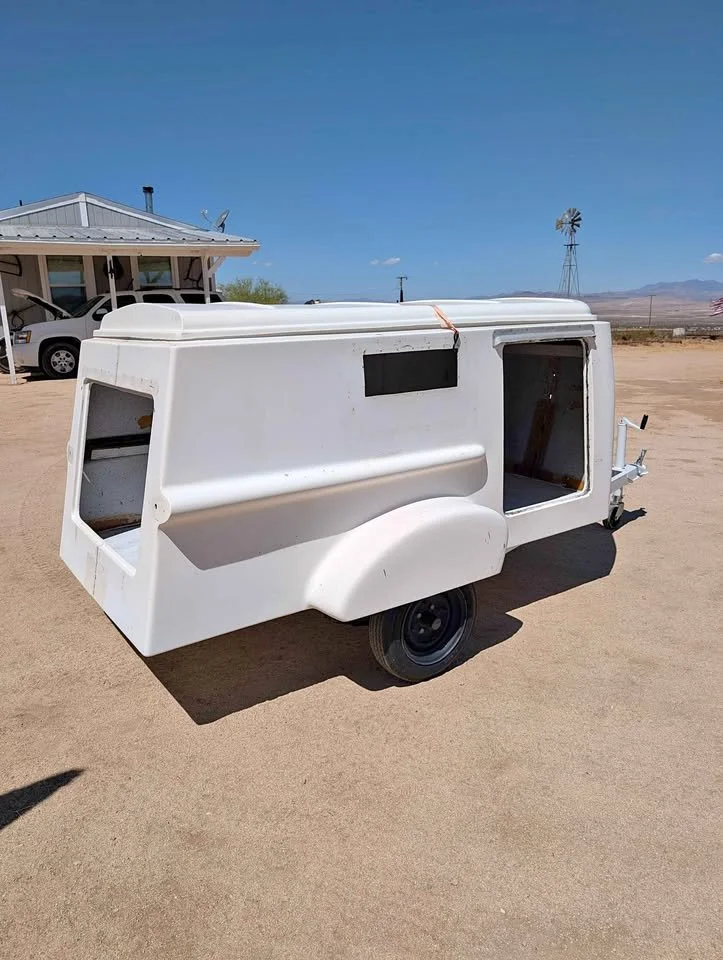
That design language is written all over #132: dramatic rear corners, a sweeping side spear, integrated wheel arches, molded fiberglass curves and, above it all, a boat that seems almost to float over the camper beneath it. These details weren’t simply decoration. Together, they gave the Trailorboat a sense of motion even while standing still.
It was a time when cars borrowed from aircraft, rockets were redefining the horizon, and designers were imagining entirely new shapes for the road ahead. And that same sense of movement wasn’t limited to automobiles. From boats and architecture to fashion and Hollywood glamour, design seemed to share the same optimism and possibility. The Trailorboat belonged to that same world—fiberglass curves, automotive lines and a boat riding above a camper, all wrapped into one wonderfully futuristic idea, ready to lift off.
Different forms. The same vision.

Why SAVING THEM Matters
Discover why this rare piece of American camping history is worth finding, documenting, and preserving.
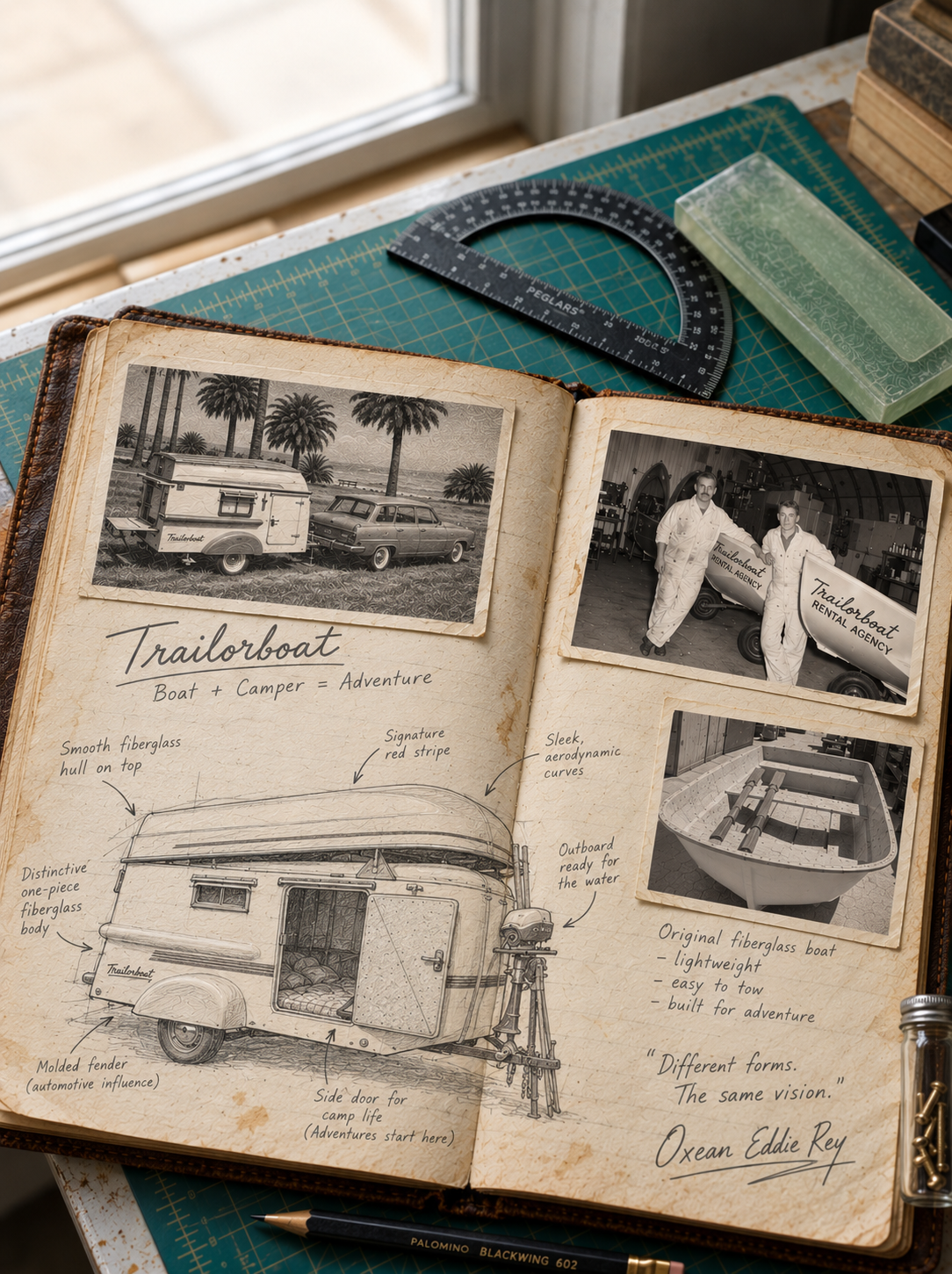
Restoring #132 started with one Trailorboat. But the more I uncover about her, the more I realize how much of the Trailorboat story is still scattered across old photographs and advertisements, forgotten documents, garages and backyards—and the memories of the people who owned them.
There are only 29 Trailorboats known to survive today, and each one may hold another piece of a story that was nearly lost. So while I bring #132 back to the road and water, I’m also working to find the others, document what survives, and preserve the history of an idea born during an era when America was imagining entirely new ways to travel, camp and explore.
Stargazer, Splashdown and Escape Pod may sound like playful names for my little Space Age fleet, but each carries a piece of my story. From childhood nights looking for Halley’s Comet to finding connection beneath the same sky, this is how three names became part of a much bigger journey.